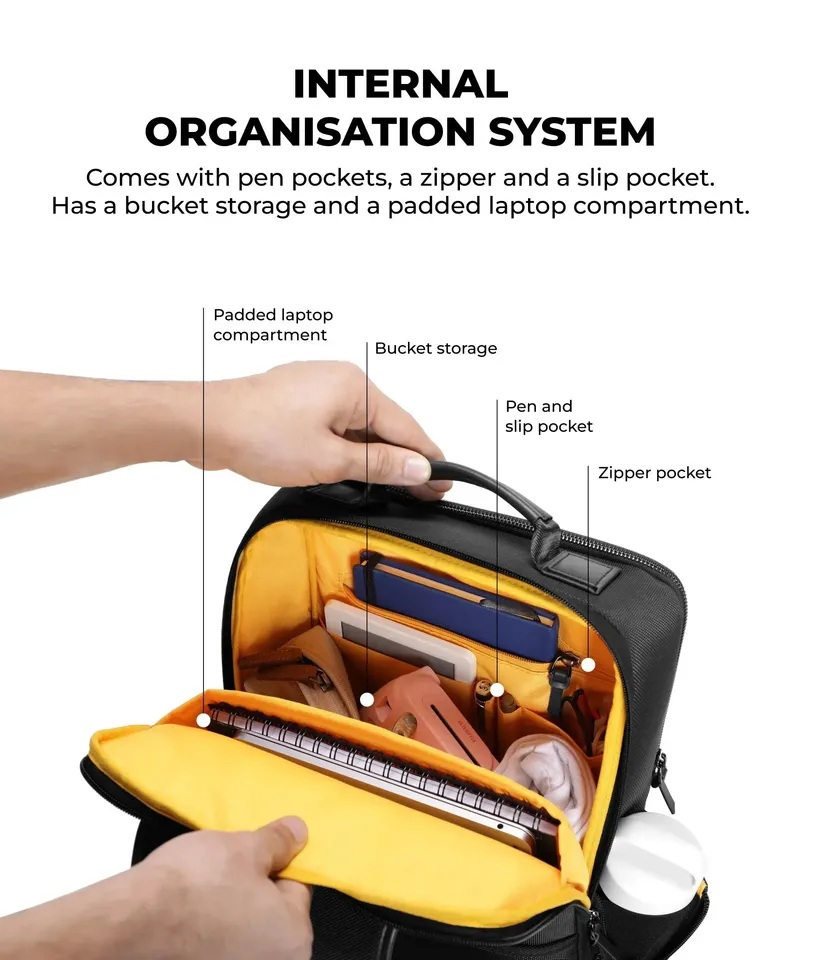
A bag can look spacious and still be frustrating once you put real things inside it. The zip may be awkward, the straps may dig in, or the laptop sleeve may stop the main compartment from holding much else. The best way to choose a backpack is to think about what you carry on an ordinary day and how long the bag will stay on your shoulders.
Quick Style Reference
| Option | Good For | Try It With / Check |
| Day backpack | Commute, errands | Light daily load |
| Travel backpack | Trips, transit | Organised compartments |
| Laptop backpack | Work | Padded device sleeve |
| Structured backpack | City use | Neater appearance |
List What You Carry Before Looking at Litres
When comparing Travel Backpacks, think in objects rather than capacity numbers: laptop, bottle, charger, umbrella, small pouch, and maybe a light layer. Travel backpacks can have a large quoted volume but still waste space through stiff dividers or a narrow opening.
Put Weight in It if You Can
Empty backpacks are misleading. Once loaded, the shoulder straps and back panel decide whether the bag feels comfortable. Wide, padded straps usually distribute weight better. Check whether the bag pulls backward or sits close to your body when you walk.
Organisation Should Match Your Habits
A Mokobara Backpacks may appeal because of neat compartments, but more pockets are not automatically better. If you forget where you put things, a simpler layout of Mokobara backpacks can be easier. Store your valuables out of reach and keep your frequently used items handy.
Inspect the Opening, Not Just the Outside
Clamshell openings are great for packing, while top-loading bags can be fast for everyday use. Try reaching the bottom without unpacking everything. A good opening should make the inside easier to use, not simply look clever in a product description.
Think About Rain and Rough Surfaces
Water-resistant fabric, covered zips, and a base that does not mark easily can be useful for regular travel. Water-resistant is not the same as waterproof, so important electronics may still need protection in heavy rain. Check care instructions for the exterior too.
Pack the Bag Once Before You Need It
Do a trial pack with the items you carry most often. Put the laptop in its sleeve, fill the bottle, add the charger, and place small essentials where you think they belong. Then close every zip and wear the bag for a few minutes. You may find that a pocket is hard to reach, the bottle makes the bag lean, or the straps need a different adjustment. A trial pack turns capacity from an abstract number into something useful. It is the quickest way to learn whether the backpack fits your habits rather than just your belongings.
To Wrap Up
A good backpack is an organisation tool you can carry comfortably. Choose it around the objects you actually take, test the straps under weight, and make sure the opening suits how you pack. A simple bag that lets you find things quickly will often be more useful than a complicated one with features you never touch.
FAQs
1. What size backpack do I need?
Fifteen to twenty litres for a daily commute with a laptop. Twenty-five to thirty-five litres for a weekend. Buying larger than you need makes it heavy.
2. Where do backpacks usually fail?
The strap attachment points, since that is where the load concentrates. Check them periodically, as a stitched attachment can often be repaired early.
3. Why does a padded back panel matter for a daily commute?
Because it lets air move between the bag and your back, and in Indian heat a flat panel with no channels leaves you soaked within twenty minutes of walking. It’s a small construction detail that’s worth paying attention to, even though listings rarely mention it.
4. Should the laptop sleeve sit flat against the base of the bag?
No, it’s better suspended rather than resting flat. That way, if the bag gets dropped, the impact doesn’t transmit straight through to the laptop, which is worth checking on any bag carrying electronics daily.
5. Is leather or synthetic better for daily use in India?
Synthetic, generally. Leather reads smarter but weighs more and stains when soaked, while a coated synthetic sheds rain and handles the monsoon months without the same risk, which matters more than the styling difference for several months a year.
